The head of the Investor Relations Department of any listed company, and here there is no distinction by company size, is well aware of the work and effort involved in creating and editing the documents of Reporting, whether it's a quarterly or biannual results report, an annual report or your own Equity Story of the company.
Collecting all the information for the period, comparing all the data received with the different departments involved, drafting and incorporating management comments, reviewing all the information again, managing the layout of the document with the design team or sometimes with a third party, updating certain visual elements to adapt it to the new content, verifying the final deliverable and receiving approval from the managers involved are some of the necessary tasks that the Investor Relations team has to carry out to periodically publish your documents of Reporting. We know that these are not easy or simple tasks to achieve successfully in the right time frame and we know the large amount of hours and resources that must be invested to achieve a good final deliverable. So, the question is, why, once we have it finished, is it published on the web and we forget about it? Does it make sense to make all that effort to end up leaving it “hanging” in the Shareholders and Investors area of the corporate website?
According to a study conducted by the Vienna University of Economics and Business in 2019, only 37% of listed companies actively reported their annual reports for several months.
All those hours spent, all that effort made by those involved to create the document must be used for more than just complying with legal obligations to publish results. Why not make the report just another element of company communication? Why not make all that work done profitable to achieve more visibility for the listed company and draw attention to the market? Each report is a communication opportunity that Investor Relations departments can take advantage of to get their documents from Reporting do not forget a documentation repository and be the highlight of a communication campaign.
According to a study conducted by the Vienna University of Economics and Business in 2019 in more than 50 publicly traded companies (DAX, MDAX, TecDAX, ATX and SMI), only 37% of them actively reported their annual reports for several months, 11% made about 10 posts on social networks and 27% did not communicate on networks.
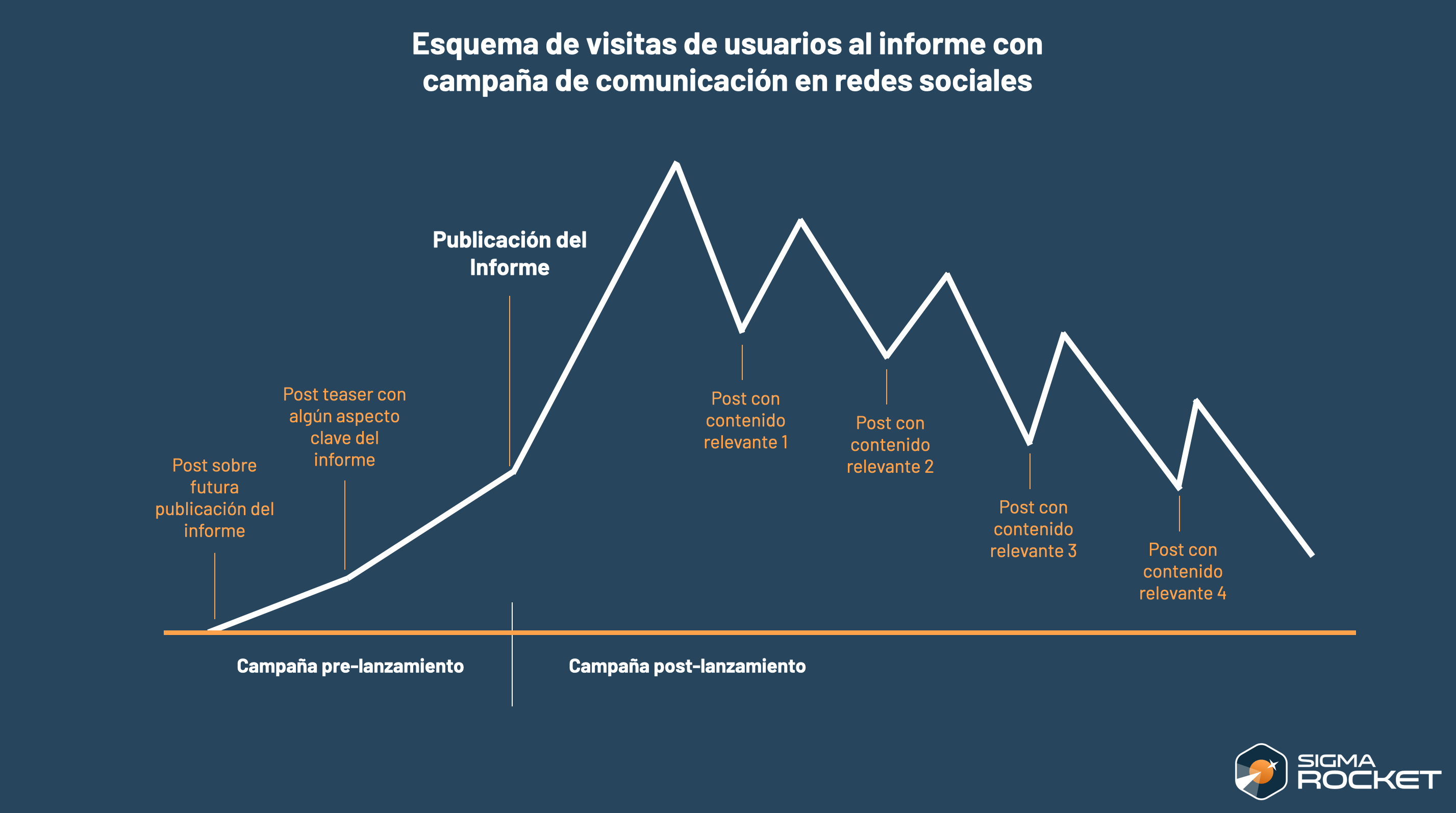
So the days when a report was created in pdf format and was “uploaded” to the web so that it could barely be consulted by some interested investors and analysts are over. Achieved economic development, strategic objectives, sustainability achievements or new projects are contents that can be communicated and must cross the “frontier” of the corporate website. Digital tools are there and allow content to be consumed in a different way, to obtain more dissemination and to reach a wider audience, for example, generating pieces such as infographics or videos with highlights from the report focused on each of our Targets (investors and analysts, but also journalists, employees, students, industry organizations, etc.). If we also add a communication campaign that takes advantage of social networks to generate interest in the report even before it is published, in order to Teaser, and that once published it manages to transfer the key aspects to our audience, then the return in visits to the web, the impacts on the report, the interaction with the public, and after all, the visibility and dissemination of the company will be multiplied.
-
Daniel Campoy Silva
Founding partner of Sigma Rocket